
Unsure about surgery? Get a trusted second opinion within 24-48 hours from the top orthopedic surgeons in the country.

Understand your options, what recovery really looks like, what it costs, and how to make the right decision with confidence.

Knee Replacement Surgery New Jersey: Complete Guide to Procedures, Recovery & Decision-Making

Medically Reviewed by the XPRT2ND Medical Advisory Board — Board-certified orthopedic surgeons reviewing content for clinical accuracy.

Quick Summary

85–90%

85–90% of patients report significant pain relief and improved function after knee replacement.
Journal of Bone and Joint Surgery (2022)

15–20+ Years

Modern implants typically last 15–20+ years depending on activity level and body weight.
Journal of Arthroplasty (2021)

790,000 Surgeries / Year

Knee replacements are common and projected to reach 3.48 million annually by 2030.
American Academy of Orthopaedic Surgeons (2023)

5–10%

Revision surgery may be required in 5–10% of patients within 10 years.

20–30%

a second opinion changes treatment plans for 20–30% of patients.

*Serving patients across Phoenix, Scottsdale, Tucson, and the greater Arizona area

What Is Knee Replacement Surgery?

Knee replacement, also called knee arthroplasty, is a surgical procedure in which damaged cartilage and bone in the knee joint are removed and replaced with prosthetic components. The procedure is designed to relieve pain, restore function, and improve quality of life for people with severe knee arthritis or injury.


The surgery typically takes 1-2 hours and involves replacing the damaged surfaces of the femur (thighbone), tibia (shinbone), and patella (kneecap) with metal and plastic implants. Most patients go home the same day or stay 1-2 nights in the hospital. Recovery to basic function takes 6-12 weeks, though full recovery can take 3-6 months or longer.

How the Knee Works: Anatomy Basics

Knee Structure

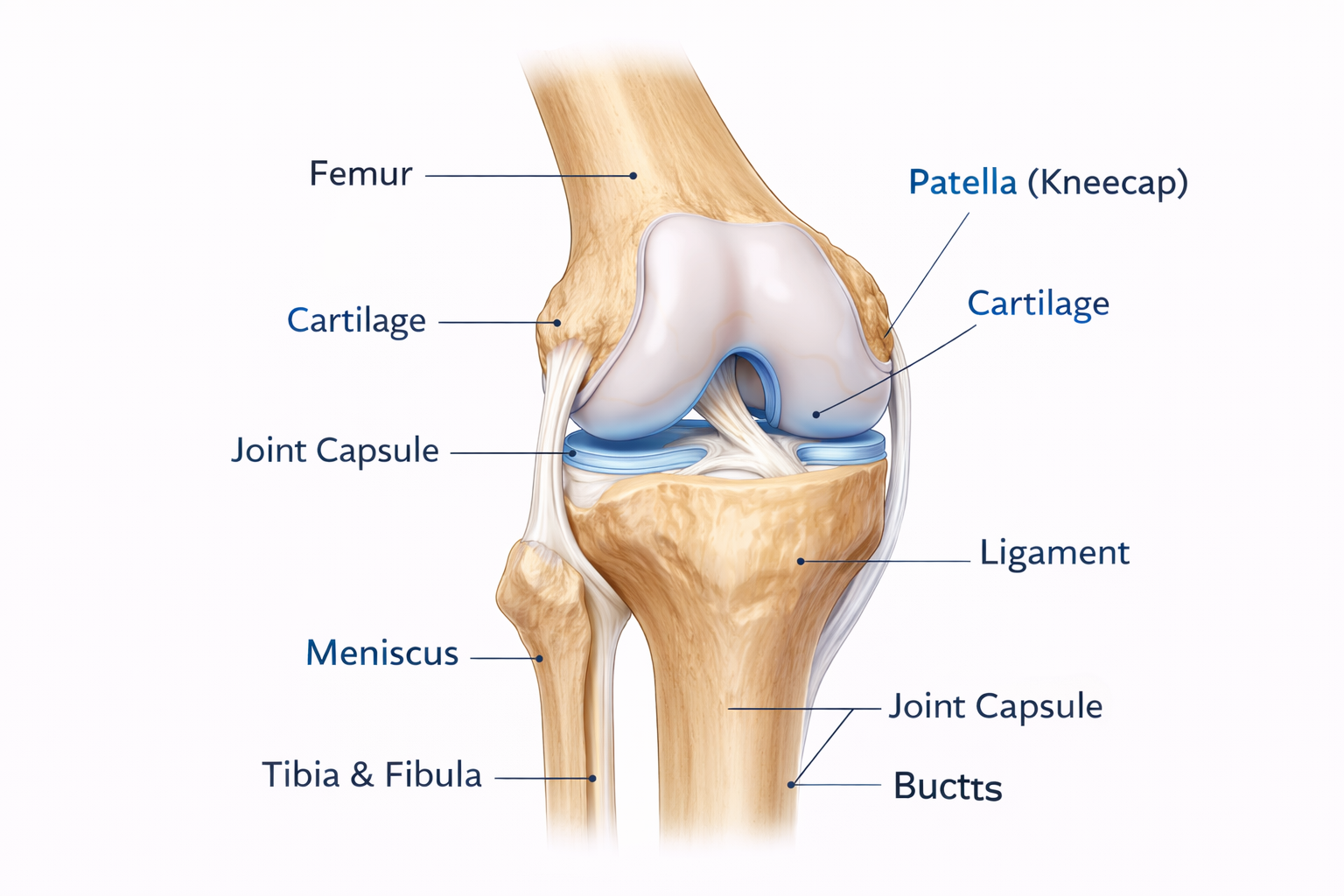
The knee is a complex joint made up of three bones: the femur (thighbone), tibia(shinbone), and fibula (smaller bone in the lower leg). These bones are connected by ligaments, tendons, and muscles that provide stability and movement. The joint surfaces are covered with cartilage, a smooth, slippery tissue that allows bones to glide over each other with minimal friction.

What Happens With Arthritis and Joint Damage

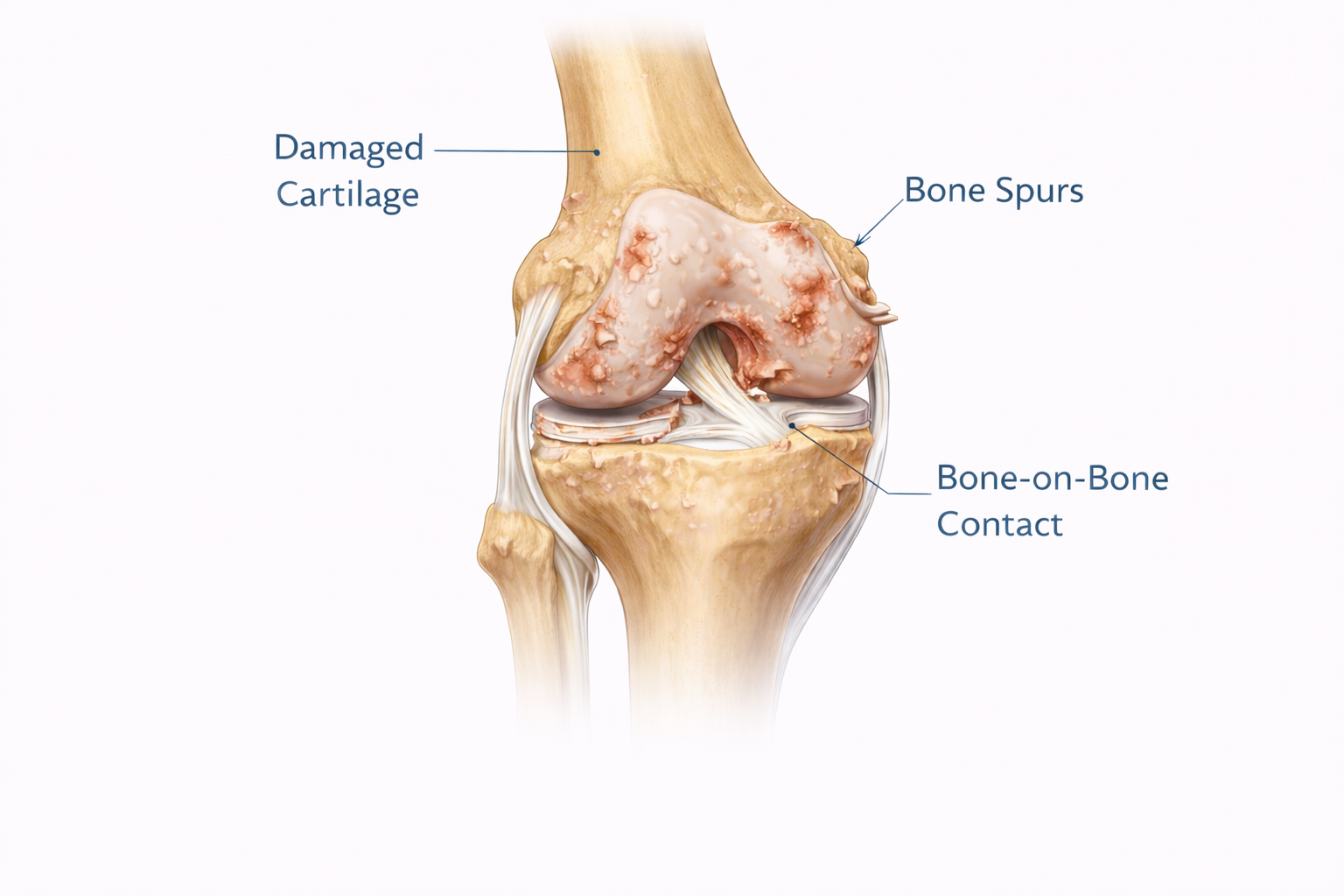
Osteoarthritis develops when the protective cartilage that cushions the knee joint gradually wears away. As cartilage deteriorates, bone-on-bone contact increases, causing pain, swelling, stiffness, and reduced mobility. This process typically develops over years and is accelerated by age, weight, previous injury, or repetitive stress on the joint.

Why Replacement Becomes Necessary

When conservative treatments—physical therapy, medications, injections, and activity modification—no longer control pain and functional limitations, knee replacement becomes a reasonable option. Surgery is typically considered when arthritis is severe enough to significantly impact daily life and imaging confirms substantial cartilage loss or bone damage.

Are You a Candidate? Self-Assessment Checklist

When conservative treatments—physical therapy, medications, injections, and activity modification—no longer control pain and functional limitations, knee replacement becomes a reasonable option. Surgery is typically considered when arthritis is severe enough to significantly impact daily life and imaging confirms substantial cartilage loss or bone damage.

Your Score

0 / 13
Select the items above to see your candidate score.

When to Consider Surgery

Severe Pain That Limits Function Despite Conservative Treatment
You experience chronic pain that persists despite rest, ice, compression, and elevation. Walking short distances, climbing stairs, or sitting comfortably becomes difficult.

Imaging Evidence of Significant Joint Damage
X-rays or MRI show bone-on-bone contact, significant cartilage loss, or severe osteoarthritis. Your surgeon has ruled out other causes of pain (meniscal tears, ligament injuries, and referred pain from the hip or back).

Failed Conservative Options

You've completed at least 3-6 months of physical therapy without adequate improvement. Corticosteroid or hyaluronic acid injections have provided temporary relief that no longer lasts.

Impact on Quality of Life

Your knee pain affects your ability to work, care for yourself, or participate in activities that matter to you. You're experiencing social isolation due to mobility limitations. Pain is affecting your mental health or sleep quality.

Age and Overall Health Support Surgical Candidacy

While age alone isn't a barrier, most candidates are 50 or older. You're in reasonably good health or have well-controlled chronic conditions. You don't have active infections or severe heart/lung disease that would make surgery risky.

Realistic Expectations and Commitment to Recovery

You understand the recovery timeline and are committed to rehabilitation. You have realistic expectations about outcomes (significant pain relief, improved function, but not perfect knees).

When to Avoid Surgery

Active Infection or Uncontrolled Medical Conditions

If you have an active infection in or near the knee, surgery should be postponed until it's resolved. Uncontrolled diabetes, heart disease, or lung conditions increase surgical risk and should be optimized first.

Severe Medical Comorbidities That Increase Surgical Risk

If you have uncontrolled heart failure, severe COPD, or a recent stroke, surgery carries a higher risk. If you're on blood thinners for other conditions, bleeding risk increases.

Inadequate Home Support for Post-Op Recovery

If you lack family or caregiver support and can't afford professional help, early recovery becomes challenging.

Unrealistic Expectations

If you expect your knee to feel "brand new" or pain-free, reconsider your goals with your surgeon. If you plan to return to high-impact sports (running, jumping) immediately, surgery may disappoint. If you're hoping to avoid physical therapy, outcomes will likely suffer.

Unwillingness to Commit to Physical Therapy and Recovery Protocol

If you're unable or unwilling to participate in post-operative rehabilitation, outcomes may be compromised. Physical therapy is essential for regaining strength, flexibility, and function.

Recent Major Surgery or Ongoing Medical Treatment

If you've had major surgery within the past 3-6 months, your body may need more time to recover before undergoing another procedure.

Pregnancy or Plans to Become Pregnant Within 12 Months

If you're pregnant or planning pregnancy in the near future, surgery should be postponed.

Types of Knee Replacement Surgery

Four common procedure types—each with different indications, benefits, and trade-offs.

Total Knee Replacement (TKR)

Removes damaged cartilage and bone from all three compartments (medial, lateral, patellofemoral) and replaces them with prosthetic components.

When it’s recommended Severe arthritis across multiple compartments, significant pain & functional limitation, failed conservative care.
Pros
  • Addresses all areas of joint damage
  • High success rate (85–90% pain relief)
  • Durable long-term outcomes
  • Extensive research & proven track record
Cons
  • Larger incision (8–10 inches)
  • Longer recovery time
  • More bone removal
  • Higher revision risk if complications occur

Partial (Unicompartmental) Knee Replacement

Replaces only one compartment (often the medial/inner side), preserving more natural bone and tissue than total replacement.

When it’s recommended Arthritis limited to one compartment, good bone quality, intact ligaments, younger/active patients, desire to preserve anatomy.
Pros
  • Smaller incision (4–6 inches)
  • Faster recovery
  • Better range of motion
  • Fewer activity restrictions
  • Preserves more natural bone
Cons
  • Requires a specific arthritis pattern
  • Higher revision rate (10–15% at 10 years)
  • Not appropriate for all patients
  • Requires careful patient selection

Patellofemoral Knee Replacement

Targets arthritis behind the kneecap (patellofemoral compartment) while preserving the other compartments.

When it’s recommended Arthritis isolated behind the kneecap, intact medial/lateral compartments, specific patellofemoral pain pattern.
Pros
  • Smallest incision
  • Fastest recovery
  • Excellent range of motion
  • Preserves maximum natural bone
Cons
  • Very specific candidacy requirements
  • Limited applicability
  • Higher revision rate (15–20% at 10 years)
  • Requires an experienced surgeon

Revision Knee Replacement

A repeat procedure performed when a previous implant fails due to wear, loosening, infection, or ongoing pain.

When it’s recommended Failed prior implant, implant wear/loosening, chronic infection, or persistent pain after initial surgery.
Pros
  • Can restore function after failure
  • Addresses specific complications
  • Access to newer implant technology
Cons
  • Larger incision (8–12 inches)
  • Longer surgery time
  • More complex procedure
  • Longer recovery
  • Higher complication risk
  • Lower success rates than primary surgery

Procedure Comparison Table

This is a Paragraph Font

How to Choose the Right Procedure for You

Decision Criteria

The right procedure depends on several factors: the location and severity of your arthritis, the condition of your ligaments and surrounding structures, your age and activity level, and your personal goals for recovery. Your surgeon will use imaging studies and physical examination to determine which procedure is most appropriate for your specific situation.

Younger, more active patients may be candidates for partial replacement to preserve bone and allow greater activity. Older patients or those with extensive arthritis may benefit from total replacement for its proven long-term durability. Your surgeon will discuss the trade-offs between each option based on your individual circumstances.

Questions to Ask Your Surgeon About Procedure Selection

·       "Why do you recommend this specific procedure for my condition?"

·       "What are the success rates for this procedure in patients like me?"

·       "How many of these procedures do you perform annually?"

·       "What are the long-term outcomes and revision rates?"

·       "What are the activity restrictions with this procedure?"

·       "Could I be a candidate for a partial replacement instead?"

When to Seek a Second Opinion on Procedure Choice

If your surgeon recommends a procedure but you're uncertain, or if you've received different recommendations from different surgeons, a second opinion can help clarify your options. Some patients want to explore whether a partial replacement is possible instead of total replacement, or vice versa. A second opinion ensures you understand all your options before committing to surgery.

Surgical Approaches & Technologies

Traditional Open Surgery

Traditional open knee replacement uses a single incision (8-10 inches) down the front of the knee. The surgeon manually removes damaged cartilage and bone, then positions and secures the prosthetic components. This approach has been refined over decades and has excellent long-term outcomes.

Pros: Well-established technique, extensive research and proven outcomes, lower cost, appropriate for complex cases.

Cons: Larger incision, more soft tissue trauma, longer recovery time, more post-operative pain and swelling.

Minimally Invasive Surgery

Minimally invasive knee replacement uses smaller incisions (4-6 inches) and specialized instruments to perform the procedure with less disruption to surrounding muscles and tissues. This approach may result in faster recovery and less pain, though outcomes are comparable to traditional surgery.

Pros: Smaller incision, less soft tissue damage, potentially faster recovery, less post-operative pain and swelling.

Cons: Requires specialized training, may not be appropriate for all patients, limited visibility during surgery, comparable long-term outcomes to traditional surgery.

Robotic-Assisted Surgery (MAKOplasty)

Robotic-assisted knee replacement uses computer guidance and robotic arms to assist the surgeon in achieving precise implant positioning and alignment. The surgeon controls the robotic system and makes all surgical decisions; the robot provides enhanced precision and consistency.

How it works: Pre-operative CT imaging creates a 3D model of your knee. During surgery, the robotic system uses this model to guide implant positioning with high precision. The surgeon maintains full control and can override the system at any time.

Precision benefits: Enhanced accuracy in implant positioning, potentially improved long-term outcomes, reduced outliers in alignment, consistent results across different surgeons.

Cost considerations: Robotic-assisted surgery typically costs $3,000-$5,000 more than traditional surgery. Insurance coverage varies; some plans cover it, others require out-of-pocket payment.

Appropriate candidates: Patients seeking maximum precision, those with complex anatomy, younger patients concerned about implant longevity, patients willing to pay for advanced technology.

Custom Knee Systems (Biomet Custom Knee)

Custom knee implants are created specifically for your anatomy using 3D imaging and computer modeling. These personalized implants are designed to match your unique knee structure and may provide better fit and function.

How it works: High-resolution CT or MRI imaging creates a detailed 3D model of your knee. Custom implants are manufactured to match your specific anatomy, potentially improving fit and alignment.

Benefits: Personalized fit, potentially improved outcomes, reduced outliers in alignment, may benefit patients with unusual anatomy.

Cost: Custom implants typically cost $2,000-$4,000 more than standard implants. Insurance coverage varies.

Technology Comparison: When Each Approach Is Appropriate

Robotic-Assisted vs. Traditional

Both approaches have excellent outcomes. Robotic-assisted surgery offers enhanced precision and potentially faster recovery; traditional surgery is well-established, less expensive, and appropriate for all patients. Your surgeon's experience and your individual anatomy should guide the choice.

Minimally Invasive vs. Open

Minimally invasive surgery may offer faster recovery and less pain; traditional open surgery provides better visibility and is appropriate for complex cases. Both approaches have comparable long-term outcomes. The choice depends on your surgeon's expertise and your individual circumstances.

Custom Implants vs. Standard

Custom implants may provide better fit for patients with unusual anatomy; standard implants have decades of proven outcomes and are less expensive. For most patients, standard implants provide excellent results. Custom implants may benefit specific patient populations.

Pre-Op Preparation Timeline (30 Days Before Surgery)

Weeks 4-3 Before Surgery

Schedule your pre-operative medical clearance with your primary care physician. Complete all required lab work, blood tests, and imaging studies. Review your current medications with your surgeon and primary care doctor—some medications need to be stopped before surgery, while others should continue.

Arrange your home for recovery: install grab bars in the bathroom, obtain a raised toilet seat and shower chair, ensure your bedroom is on the main floor if possible. Begin pre-operative physical therapy if recommended by your surgeon to establish baseline strength and flexibility.

Weeks 3-2 Before Surgery

Finalize your support arrangements. Identify who will help you during the first 2-4 weeks of recovery—family members, friends, or professional caregivers. Confirm their availability and discuss specific tasks they'll help with (cooking, cleaning, transportation, personal care).

Prepare your home: stock your freezer with easy-to-prepare meals, arrange for grocery delivery if needed, ensure frequently used items are at waist height to avoid bending. Complete any remaining pre-operative testing or consultations.

Week 1 Before Surgery

Attend your final pre-operative appointment with your surgeon. Confirm the surgery date, time, and location. Receive final instructions regarding medications, fasting, and arrival time. Ask any remaining questions about the procedure, recovery, or post-operative care.

Stop taking certain medications as directed (typically blood thinners, NSAIDs, and some supplements). Continue taking heart medications, blood pressure medications, and other essential medications unless specifically instructed otherwise. Confirm fasting instructions—typically nothing to eat or drink after midnight the night before surgery.

Day Before Surgery

Complete your final preparations. Shower or bathe using the soap provided by your surgeon (typically an antimicrobial soap to reduce infection risk). Lay out comfortable, loose-fitting clothes for going home. Confirm your arrival time and location with the surgical facility.

Arrange transportation—you cannot drive yourself home after surgery due to anesthesia. Confirm that your support person will be available to pick you up and stay with you for the first 24 hours.

Day of Surgery

Arrive at the surgical facility at the scheduled time. Bring your insurance card, photo ID, and any required paperwork. Wear comfortable, loose-fitting clothes. Remove jewelry, watches, and other accessories. Confirm that you've followed all fasting instructions.

The surgical team will review your medical history, confirm the surgical site, and answer any final questions. You'll receive pre-operative medications to help you relax. An anesthesiologist will discuss anesthesia options and answer your questions. Then you'll be taken to the operating room.

What Happens During Knee Replacement Surgery

Anesthesia and Preparation

You'll receive general anesthesia (you'll be asleep) or regional anesthesia (numbing medication in your leg while you're sedated). Your vital signs will be monitored throughout the procedure. The surgical team will position you on the operating table and prepare your knee with sterile solution.

Step-by-Step Surgical Procedure

The surgeon makes an incision (typically 8-10 inches for total replacement) down the front of your knee. Damaged cartilage and bone are carefully removed from the femur, tibia, and patella. The surgeon tests the fit and alignment of the prosthetic components.

Once proper fit is confirmed, the components are secured to the bone using special cement or press-fit techniques. The incision is closed with sutures or staples. A sterile dressing is applied, and you're moved to the recovery room.

Typical Duration

Total knee replacement typically takes 1-2 hours. Partial replacements may take slightly less time. Revision surgeries often take longer due to increased complexity.

Implant Materials and Design

Modern knee implants are made of metal (typically cobalt-chromium or titanium) for the femoral and tibial components, with a plastic (polyethylene) spacer between them. The patella component may be plastic or metal. These materials are biocompatible and designed to last 15-20+ years.

Hospital Stay & Immediate Post-Op

Recovery Room

You'll spend 1-2 hours in the recovery room as anesthesia wears off. Your vital signs will be monitored closely. You may feel groggy, nauseous, or cold—these effects typically resolve within a few hours. Pain medication will be provided as needed.

Pain Management

Pain is expected after surgery and is managed with medications (opioids, NSAIDs, acetaminophen), ice, elevation, and compression. Your surgical team will work to keep you comfortable while avoiding excessive medication that could slow recovery.

Movement and Physical Therapy

Physical therapy typically begins the same day or the next day after surgery. A therapist will help you perform gentle exercises, practice walking with crutches or a walker, and begin range-of-motion work. Early movement is important for preventing stiffness and promoting healing.

Hospital Stay Duration

Many patients go home the same day or stay 1-2 nights in the hospital. Your surgeon will determine when you're ready for discharge based on your pain control, ability to walk with assistance, and overall recovery progress.

Discharge Criteria and Instructions

Before going home, you'll receive detailed instructions regarding medications, wound care, activity restrictions, and follow-up appointments. You'll be given prescriptions for pain medication and possibly antibiotics. Confirm that you have transportation home and support for the first 24 hours.

Week-by-Week Recovery Guide (Weeks 1-12)

Weeks 1-2: Acute Phase

Pain and Swelling: Expect significant pain and swelling. Ice, elevation, and compression help manage these symptoms. Pain medication will be necessary.

Mobility: You'll use a walker or crutches for mobility. Walking short distances (10-20 feet) is encouraged to prevent blood clots and promote healing.

Physical Therapy: PT begins immediately, focusing on gentle range-of-motion exercises and basic strengthening. Sessions typically occur daily in the hospital and 2-3 times weekly after discharge.

Wound Care: Keep your incision clean and dry. Change dressings as directed. Watch for signs of infection (increased redness, warmth, drainage, fever).

Weeks 3-4: Early Recovery Phase

Pain and Swelling: Pain decreases gradually. Swelling remains significant but begins to improve with ice, elevation, and compression.

Mobility: Transition from walker to crutches, then to a cane. Walking distance increases to 50-100 feet. Stairs become possible with assistance.

Physical Therapy: PT continues 2-3 times weekly. Range-of-motion goals: 0-90 degrees of knee bending. Strengthening exercises increase in intensity.

Activity: Light activities resume (sitting, short walks, basic self-care). Avoid heavy lifting, driving, and high-impact activities.

Weeks 5-8: Intermediate Recovery Phase

Pain and Swelling: Pain continues to decrease. Swelling improves significantly with continued ice and elevation.

Mobility: Transition from cane to independent walking. Walking distance increases to 200+ feet. Stairs become easier.

Physical Therapy: PT continues 1-2 times weekly. Range-of-motion goals: 0-110+ degrees. Strengthening exercises progress. Balance and proprioception work begins.

Activity: Return to light activities (desk work, light household tasks). Driving may be cleared if pain is controlled and you're off opioids. Sexual activity typically resumes.

Weeks 9-12: Advanced Recovery Phase

Pain and Swelling: Minimal pain with activity. Swelling mostly resolved. Occasional stiffness, especially in the morning.

Mobility: Full weight-bearing without assistive devices. Walking distances return to normal. Stairs are easy.

Physical Therapy: PT continues as needed (1x weekly or less). Focus shifts to strengthening, flexibility, and return to desired activities.

Activity: Return to most daily activities. Light exercise (walking, swimming, cycling) resumes. Return to work (desk job) typically occurs by week 8-12.

Pain Management Post-Op

Medications

Pain medications typically include opioids (for severe pain), NSAIDs (for inflammation and pain), and acetaminophen (for mild to moderate pain). Your surgeon will provide a pain management plan and prescriptions. Use medications as directed, not just when pain is severe—staying ahead of pain is easier than catching up.

Non-Medication Strategies

Ice, elevation, and compression significantly reduce pain and swelling. Apply ice for 15-20 minutes several times daily for the first 2-3 weeks. Elevate your leg above heart level when sitting or lying down. Compression stockings or wraps help reduce swelling.

When to Expect Pain Reduction

Significant pain typically decreases within the first 2-3 weeks. By week 6-8, most patients report mild pain with activity. Some patients experience occasional pain or stiffness for several months, which typically resolves with continued physical therapy and activity.

Managing Breakthrough Pain

If pain suddenly increases or doesn't improve with your current medication regimen, contact your surgeon. Breakthrough pain may indicate a complication (infection, blood clot, implant problem) that requires evaluation.

Physical Therapy & Rehabilitation

PT Schedule

Physical therapy typically occurs 2-3 times weekly for the first 4-6 weeks, then 1-2 times weekly for weeks 6-12. Sessions last 45-60 minutes. Home exercises are equally important and should be performed daily.

Range-of-Motion Goals

By week 6, your goal is 0-90 degrees of knee bending. By week 12, most patients achieve 0-110+ degrees. Full range of motion (0-120+ degrees) may take 3-6 months. Aggressive PT helps achieve these goals.

Strength-Building Progression

Early exercises focus on gentle quadriceps (thigh) and hamstring (back of thigh) strengthening. As healing progresses, resistance exercises increase. By week 8-12, you'll perform exercises with resistance bands or light weights.

Home Exercise Program

Your PT will provide a home exercise program to perform daily. Consistency is crucial—home exercises are as important as formal PT sessions. Most patients need 30-45 minutes daily for optimal recovery.

Importance of Compliance for Optimal Outcomes

Patients who comply with PT and home exercises achieve better outcomes: faster pain relief, better range of motion, stronger muscles, and faster return to activities. Non-compliance often results in stiffness, weakness, and prolonged recovery.

Return to Activities & Milestones

Walking

Weeks 1-2: Walking with walker or crutches, 10-20 feet.

Weeks 3-4: Walking with crutches or cane, 50-100 feet.

Weeks 5-8: Walking with cane or independently, 200+ feet.

Weeks 9-12: Independent walking, normal distances.

Driving

Most patients can resume driving 4-6 weeks after surgery, once pain is controlled, strength returns, and you're off opioid medications. Right knee surgery typically requires longer restriction than left knee for automatic transmission vehicles. Confirm clearance with your surgeon before driving.

Work

Desk jobs: Most patients return to desk work by week 6-8.

Light physical labor: Return typically occurs by week 12.

Heavy physical labor: Return may take 3-6 months or longer.

Hobbies and Recreation

Walking: Weeks 4-6

Swimming: Weeks 6-8

Cycling: Weeks 8-12

Golf: Weeks 12+

Gardening: Weeks 8-12

Travel: Weeks 4-6 (car), weeks 6-8 (air)

High-impact sports: Generally not recommended; discuss with your surgeon.

Sexual Activity

Sexual activity typically resumes 4-6 weeks after surgery once pain is controlled and mobility improves. Communicate with your partner about comfort and positioning.

Swelling, Stiffness & Complications

Managing Swelling

Swelling is normal and expected after knee replacement. Ice, elevation, compression, and physical therapy help manage swelling. Most swelling resolves within 3-6 months, though some patients experience mild swelling for up to a year.

Addressing Stiffness

Stiffness is common in the first weeks after surgery. Aggressive physical therapy, home exercises, and consistent movement help prevent and address stiffness. If stiffness persists beyond 3 months, discuss with your surgeon—additional interventions may be needed.

Signs of Complications

Contact your surgeon immediately if you experience:

·       Fever (temperature above 101.5°F)

·       Increased redness, warmth, or drainage from the incision

·       Severe or increasing pain not controlled by medication

·       Calf swelling, warmth, or pain (possible blood clot)

·       Chest pain or shortness of breath

·       Inability to bear weight or move your knee

When to Contact Your Surgeon

Don't wait for your next appointment if you have concerns. Contact your surgeon's office with any questions or if you notice changes in your recovery. Early identification of complications leads to better outcomes.

Understanding Risks & Complications

Common Complications

Infection: Occurs in fewer than 1-2% of cases. Prevented through antibiotics, sterile technique, and proper wound care. Early identification and treatment are important.

Blood Clots: Occur in 1-3% of cases. Prevented through compression stockings, blood thinners, and early movement. Symptoms include calf swelling, warmth, or pain.

Stiffness: Affects 5-10% of patients. Prevented through aggressive physical therapy and consistent home exercises. Most cases resolve with continued PT.

Persistent Pain: Affects 5-10% of patients. May be related to implant positioning, nerve irritation, or other factors. Discuss with your surgeon if pain doesn't improve as expected

Infection Prevention

Antibiotics are given before and after surgery to prevent infection. Keep your incision clean and dry. Avoid swimming or soaking in water until your incision is fully healed (typically 3-4 weeks). Watch for signs of infection and contact your surgeon immediately if you notice fever, increased redness, or drainage.

Blood Clot Prevention

Compression stockings reduce blood clot risk. Blood thinners may be prescribed for high-risk patients. Early movement and walking are important. Elevate your leg when sitting or lying down. Contact your surgeon immediately if you develop calf swelling, warmth, or pain.

Implant Longevity

Modern knee implants typically last 15-20+ years in most patients, though longevity varies by activity level and body weight (Journal of Arthroplasty, 2021). Younger patients should factor potential revision surgery into their long-term planning. Avoiding high-impact activities helps extend implant lifespan.

Revision Surgery

Revision surgery is required in approximately 5-10% of patients within 10 years. Reasons include implant wear, loosening, infection, or persistent pain. Revision surgery is more complex than primary surgery and has slightly lower success rates, but most patients benefit from revision when needed.

Long-Term Outcomes & Expectations

Pain Relief

90%+ of patients experience significant pain relief after knee replacement. Most report that their pain is substantially better than before surgery, though some residual discomfort is common. Pain relief typically continues to improve over the first year as swelling resolves and strength returns.

Mobility and Function

Most patients return to desired activities within 3-6 months. Walking, climbing stairs, and basic self-care become easy. Many patients report improved quality of life and ability to participate in hobbies and social activities.

Implant Lifespan and Revision Rates

Modern implants last 15-20+ years. Revision surgery is required in 5-10% of patients within 10 years. Younger patients may eventually need revision surgery later in life. Choosing an experienced surgeon and following post-operative guidelines help maximize implant lifespan.

Activity Restrictions

High-impact activities (running, jumping, competitive sports) are generally not recommended with a knee replacement. Low-impact activities (walking, swimming, cycling, golf) are typically appropriate. Your surgeon will discuss specific activity recommendations based on your implant type and individual circumstances.

Ongoing Care

Regular follow-up appointments with your surgeon are important. Most surgeons recommend annual check-ups for the first few years, then every 2-3 years. Periodic imaging may be needed to monitor implant position and wear. Maintaining strength and flexibility through regular activity helps preserve long-term function.

Realistic Expectations

What Surgery Can and Cannot Do

Knee replacement can significantly reduce pain and improve function in most patients. It cannot restore your knee to a pre-injury state or guarantee perfect outcomes. Some patients experience residual pain or stiffness despite successful surgery. High-impact activities may not be possible with a knee replacement.

Timeline for Full Recovery

Most patients regain basic function within 6-8 weeks and achieve substantial recovery within 3-6 months. Full recovery, including maximum strength and flexibility, may take up to 12 months. Individual timelines vary based on age, overall health, and commitment to physical therapy.

Variability in Outcomes

Outcomes vary based on multiple factors: age, weight, overall health, implant type, surgical technique, surgeon experience, and patient compliance with physical therapy. Most patients have excellent outcomes, but some experience complications or suboptimal results.

Importance of PT Compliance and Lifestyle Factors

Physical therapy compliance is one of the strongest predictors of successful recovery. Patients who consistently perform home exercises and attend PT sessions achieve better outcomes. Maintaining a healthy weight, staying active, and avoiding high-impact activities also support long-term success.

Understanding Knee Replacement Costs

Cost Breakdown

Surgeon fees: $3,000-$8,000

Facility fees (hospital vs. surgery center): $10,000-$30,000

Anesthesia fees: $1,000-$3,000

Implant costs: $5,000-$15,000

Pre-op testing and imaging: $500-$2,000

Post-op PT and follow-up care: $2,000-$5,000

Total range: $40,000-$80,000 depending on facility, surgeon, and implant type.

Insurance Pre-Authorization & Coverage

Most insurance plans require pre-authorization before surgery. Your surgeon's office typically handles this process. Pre-authorization involves submitting medical records and imaging to your insurance company for review. Approval typically takes 1-2 weeks.

What insurance typically covers: Surgeon fees, facility fees, anesthesia, standard implants, and post-operative care. Some plans cover advanced technology (robotic surgery, custom implants) while others require out-of-pocket payment.

Out-of-pocket costs: For insured patients, out-of-pocket costs typically range from $3,000-$8,000 depending on your deductible, copays, and coinsurance.

Financial Assistance & Payment Options

Many hospitals offer financial assistance programs for uninsured or underinsured patients. Payment plans and financing options are often available. Medicare and Medicaid typically cover knee replacement for eligible beneficiaries. Discuss financial options with your surgeon's office before scheduling surgery.

Knee Replacement in New Jersey: Regional Considerations

New Jersey performs approximately 28,000 knee replacement procedures annually, supported by a dense network of orthopedic programs across the state. Major spine and joint programs operate within Atlantic Health System (Morristown Medical Center), Hackensack Meridian Health, RWJBarnabas Health, and Virtua Health—all offering accredited orthopedic surgery programs with fellowship-trained surgeons.

Insurance Coverage in New Jersey

Horizon Blue Cross Blue Shield of New Jersey is the state's dominant carrier and typically covers knee replacement when medical necessity criteria are met, requiring prior authorization.

Aetna, UnitedHealthcare, Cigna, and AmeriHealth NJ are also widely accepted and generally cover knee replacement with standard pre-authorization requirements.

Medicare Advantage plans are common given New Jersey's older suburban population. Verify your specific plan's facility network and coverage details before scheduling surgery.

Costs in New Jersey

Total costs in New Jersey range from $40,000–$80,000 depending on facility, surgeon, and implant type.

Most insured patients pay $3,000–$8,000 out-of-pocket after deductibles and coinsurance.

Uninsured patients should request itemized estimates and ask about self-pay discounts, which many New Jersey surgical centers offer.

Access & Facility Considerations

Northern New Jersey patients have access to NYC-area specialists across the border, expanding options beyond in-state providers.

Rural and shore-region patients may need to travel to Newark, Morristown, or New Brunswick for subspecialty orthopedic care.

Verify Joint Commission accreditation for any surgical facility you consider.

XPRT2ND Orthopedic Second Opinion

Making decisions about knee replacement is significant, and having confidence in your treatment plan matters. XPRT2ND delivers independent second opinions from board-certified orthopedic surgeons—without waiting weeks for a specialist appointment.

How It Works

Submit your records — imaging studies, surgical reports, and medical history through our secure platform.

Expert review — a board-certified orthopedic surgeon analyzes your case independently, with no prior relationship to your current care team.

Detailed report — receive a comprehensive written second opinion within 24-48 hours.

Informed decision — use this perspective to move forward with confidence.

A Second Opinion Is Especially Valuable If

·       You have doubts about whether surgery is truly necessary

·       You've received conflicting recommendations between partial and total replacement

·       Your symptoms and imaging findings don't clearly match

·       You want to confirm all conservative options have been explored

·       You're a younger or more active patient concerned about implant longevity

Don't navigate this decision alone. Submit your records securely online and receive a board-certified expert assessment within 24-48 hours.

Frequently Asked Questions

People Also Ask

Ready to Make a Confident Decision?

Knee replacement is one of orthopedic surgery's most successful procedures—but it's still a major, irreversible decision that deserves careful consideration and independent expert input.

Whether you've just received a surgical recommendation or have been weighing this decision for months, an independent second opinion from XPRT2ND gives you clarity without pressure. Board-certified orthopedic surgeons review your case and deliver a comprehensive written assessment within 24-48 hours.

MEET THE FOUNDER & CEO

Hey, I'm Name!

I started lorem ipsum dolor sit amet, consectetur adipisicing elit and have since been able to lorem ipsum.

Ever since I've been able to lorem ipsum dolor sit amet, consectetur, including some cool stuff like:

Credibility factor lorem ipsum

Authority stats and other lorem ipsum

Results and experience lorem ipsum

Clarity Before Knee Surgery Changes Everything

Before committing to knee replacement surgery, get an independent second opinion from a board-certified orthopedic specialist. Upload your records securely and receive an expert evaluation within 24–48 hours.

© Copyright 2026 xprt2nd.com-All rights reserved

Told you need a knee replacement?

Get an independent second opinion in 24–48 hours.